
Key Takeaways
- Oversight requirements vary: Oversight requirements can vary by jurisdiction, so practices should confirm applicable rules before formalizing recruitment plans
- Compensation structures differ: Compensation structures are often shaped by involvement level, responsibilities, and local considerations
- Active involvement differs from nominal oversight: Some practices engage medical directors with limited day-to-day involvement, while others build more collaborative partnerships
- Clear agreements help define expectations: Clear agreements help define responsibilities, compensation, insurance expectations, and transition terms
- Finding aligned physicians can be complex: Finding qualified physicians who are aligned on expectations, availability, and involvement can be more complex than many owners expect
Medical director requirements can vary significantly by jurisdiction. Finding qualified physicians who are aligned on expectations, availability, and involvement can be more complex than many owners expect.
Understanding the difference can help practices recruit more intentionally.
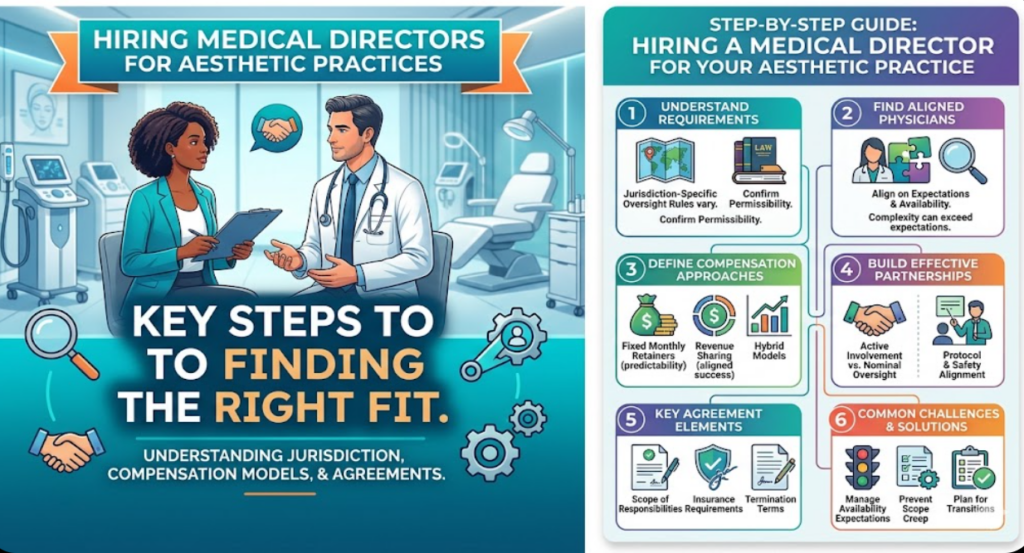
Understanding Requirements
Some jurisdictions require physician oversight or physician medical director involvement for certain aesthetic practice models.
Practices should confirm whether their jurisdiction permits the oversight model they intend to use, as requirements can differ.
Verifying requirements in your jurisdiction is an important step when evaluating oversight models.
Compensation Approaches
Compensation structures are often shaped by involvement level, responsibilities, and local considerations.
Fixed monthly retainers: Fixed monthly fees vary widely depending on practice size and involvement level. This provides budget predictability.
Revenue sharing: Revenue-sharing arrangements vary widely based on involvement level and structure. This aligns physician interests with practice success.
Hybrid models: Some practices combine base retainers with performance components or revenue shares above certain thresholds.
Building Effective Partnerships
More engaged medical director relationships may support stronger operational alignment and clinical collaboration.
Protocol alignment: Engaged medical directors may play an important role in helping practices align on protocols, safety expectations, and oversight processes.
Education and guidance: Depending on the relationship, some medical directors may also support education, mentorship, or clinical guidance.
Oversight involvement: More active involvement may support stronger oversight, communication, and consistency.
Key Agreement Elements
Clear agreements help define responsibilities, compensation, insurance expectations, and transition terms.
Scope of responsibilities: Clear documentation of oversight duties, availability requirements, and decision-making authority
Compensation structure: Detailed payment terms, expense reimbursement, and any performance components
Insurance requirements: Insurance responsibilities should be clearly addressed so both parties understand the coverage expectations tied to the relationship.
Termination provisions: Notice periods and transition responsibilities should be clearly documented.
Common Challenges
Managing medical director relationships often requires more ongoing attention than many practice owners anticipate.
Availability expectations: Physicians balancing multiple commitments may struggle to provide consistent availability. Clear expectations help prevent frustration.
Scope creep: As practices grow, oversight demands may expand beyond original agreements. Regular relationship reviews help address evolving needs.
Transition planning: Losing a medical director can create significant operational disruption. Backup medical director relationships or transition plans help mitigate risk.
Supporting Medical Director Relationships
At PAVAUSA, we support operational aspects of medical director relationships while clinical decisions remain under licensed medical leadership.
We support practices with operational frameworks, documentation processes, and communication workflows that may help bring more structure to physician partnerships.
Visit pavausa.com to learn how our operational support can help practices manage physician partnerships more consistently. Build clearer, better-supported physician partnership structures.
Frequently Asked Questions
How do we find qualified medical director candidates?
Professional networks, aesthetic medicine associations, and medical director recruiting services can help identify candidates. Many practices find medical directors through existing professional relationships or referrals from other practice owners. Be clear about expectations and involvement level when recruiting to attract genuinely interested physicians rather than those seeking passive income.
What if our medical director relationship isn’t working?
Address concerns directly with your medical director first. Many relationship issues stem from unclear expectations that can be resolved through open communication. If problems persist, review your agreement’s termination provisions and begin identifying replacement candidates while honoring notice periods. Having backup medical director relationships or transition plans helps prevent operational disruption during changes.
Disclaimer: This article provides general educational information about medical director relationships for aesthetic practices. Regulatory requirements vary by jurisdiction and change over time. This content does not constitute legal, regulatory, or compliance advice. Consult with qualified healthcare attorneys and compliance professionals regarding medical director requirements and agreements appropriate for your specific practice and jurisdiction. PAVAUSA supports operational aspects of medical spa practices while clinical decisions remain under licensed medical leadership. PAVAUSA does not guarantee compliance with any specific regulatory requirements.